
Pinar
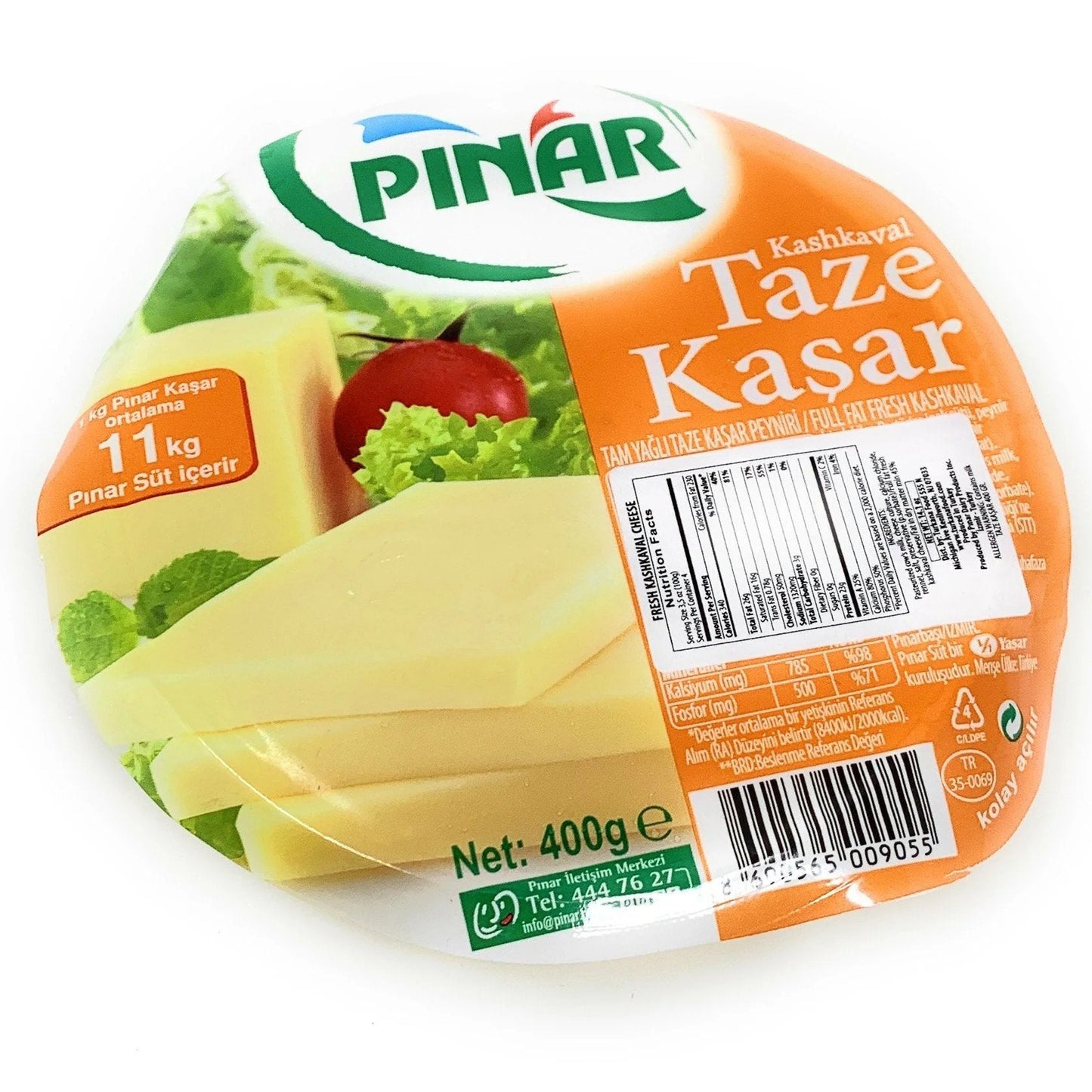
Pinar | Fresh Kashkaval Cheese | Kasar Peyniri | 14.1 oz (400 g)
Pinar | Fresh Kashkaval Cheese | Kasar Peyniri | 14.1 oz (400 g)
Couldn't load pickup availability
Fresh kashkaval from Pinar — pale, mild and elastic. This is the cheese Turkish kitchens reach for whenever something needs to melt.
Highlights
- Fresh kasar — sold young, so it stays pale, mild and elastic
- Melts smoothly — stretched curd melts into a sheet, not into oil
- Mild and milky — no sharpness to argue with
- The toast cheese — what a Turkish tost is built on
How to Enjoy
Toasted sandwiches, pide, borek, omelettes — anywhere the cheese needs to melt and stretch. Also fine sliced cold on a breakfast plate, though it is gentler than most breakfast cheeses.
What Is Kashkaval?
The cheese behind the melt. Kashkaval — kasar in Turkish — is a pasta filata cheese, which means the curd is heated and stretched before it is shaped. That is the same family mozzarella and provolone belong to, and it is why kashkaval melts into a smooth sheet rather than separating into oil and solids the way a crumbly cheese does.
Fresh versus aged. This is the distinction that matters most on the shelf.
Fresh kashkaval (taze kasar) is sold at a few weeks. Pale, mild, milky, elastic, and the cheese Turkish households put in toasted sandwiches and on pide. It melts perfectly and tastes gentle.
Aged kashkaval (eski kasar) is matured for months. It darkens to deep yellow, hardens, turns sharp and salty, and develops a nutty depth. It grates rather than slices and it is used the way an Italian cook uses pecorino — over pasta, into pastry, shaved onto salad.
Where it comes from. Kashkaval is shared across the Balkans and Anatolia — kashkaval in Bulgaria and Romania, kaskaval in the Balkans, kasar in Turkiye, and caciocavallo in southern Italy, which is almost certainly where the name travelled from. Bulgarian kashkaval is usually made from sheep's milk and comes out sharper; Turkish kasar is more often cow's milk and milder. Kars kasar, from the far northeast, is the most prized Turkish version.
What to do with it. Fresh for melting — tost, pide, borek, omelette. Aged for flavour — grated over pasta and pilaf, shaved into salads, or simply eaten in thin slices with bread and tea.
Product Details
| Product | Fresh kashkaval |
|---|---|
| Brand | Pinar |
| Net Weight | 14.10 oz (400 g) |
| Storage | Keep refrigerated. Wrap the cut face or it dries out. |
| Milk | To be confirmed from the pack |
| Style | Fresh |
| Ingredients | To be confirmed from the pack |
| Allergens | Contains milk. See package for full allergen information. |
Also known as: kasar, kasar peyniri, taze kasar, kashkaval, melting cheese
Share